

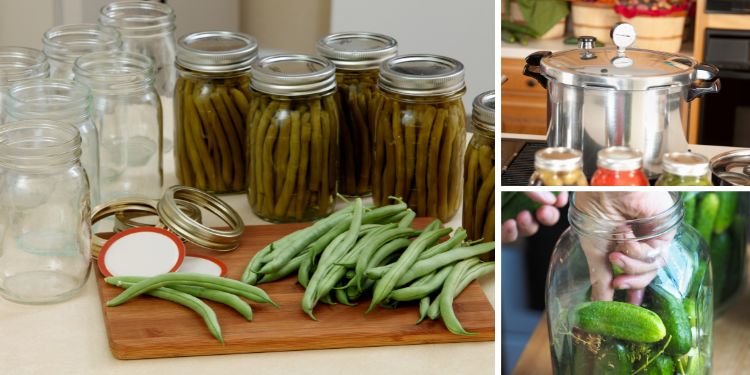


Canning is an excellent way to preserve food for long-term storage, and most preppers have at least some experience with canning.
If you’re a newbie, you may be wondering about water-bath versus pressure canning. And if you’re a long-time canning pro, you probably love to debate and discuss information about both of these canning methods.
What Is the Difference Between Water-Bath and Pressure Canning?
Canning is an umbrella term that is used when talking about both hot water bath canning and pressure canning.
Water bath and pressure canning are different methods used to preserve food in jars, but they aren’t used for the same types of foods.
Here are some of the most significant differences between water bath and pressure canning:
- Water bath canning is used for processing high-acid foods in boiling water, and pressure canning is used for processing low-acid foods under pressure.
- Water bath canning doesn’t require a sealed canner. All you need is a large container with a regular lid.
- Water bath canning uses more water but doesn’t take as long.
- Pressure canning reaches higher temperatures, up to 240°F (116°C), while water bath canning only gets up to 212°F (100°C).
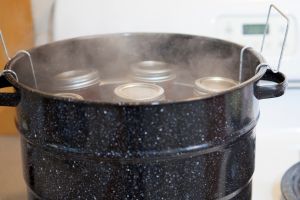
Another major difference between water bath and pressure canning is that hot water bath canning is easier, so a lot of beginners are more comfortable with it.
On the other hand, pressure canning scares some folks because of the high-pressure equipment and the added steps, making them hesitant to give it a try.
If you’ve heard horror stories about the risks of canning, such as botulism or exploding canners, set your mind at ease.
Modern canning equipment is a lot easier to work with than it used to be, and if you follow safety precautions and instructions, the dangers of canning are easily avoidable.
The Science Behind Canning
How does canning food at home work?
Unlike some other popular food preservation methods, such as drying, freezing, and fermenting, canning isn’t a natural process. It’s more of an industrial one.
Canning creates an anaerobic environment inside a sealed jar by removing oxygen, thereby increasing the shelf life of its contents. Canned food lasts longer and isn’t affected by the growth of aerobic bacteria, yeast, and mold, which can’t survive without oxygen.
The Risk of Botulism in Canned Food
The biggest risk you take with canned food is botulism, which is caused by Clostridium botulinum, an anaerobic bacteria that occurs naturally in low-oxygen environments. Clostridium botulinum can be found in many places, including dirt, low-acid foods, and raw honey.
While rare, botulism is deadly.
According to the Centers for Disease Control, there were 210 cases of food-borne botulism reported in the US during the 18-year period between 1996 and 2014.
Of these cases, about one-third came from home canned foods.
Botulism is much more common in low-acid, pressure-canned foods because the bacteria don’t grow in high-acid environments.
That’s why it’s safe to eat water-bath processed foods like jams, pickles, and relishes without cooking them, but you must heat canned foods to 185°F (85°C) for at least five minutes before consuming them.
Water-Bath Canning
Water bath canning is surprisingly easy. It’s a lower temperature method of canning for high acid foods.
Foods You Can Safely Process With the Water-Bath Method
Not everything can be processed with water-bath canning, but there are several types of food that are recommended for this method:
- Fruits
- Fruit juices
- Jams, jellies, and chutneys
- Salsas and tomatoes
- Pickles and relishes
- Pie fillings
- Vinegars
Equipment You Need for Water-Bath Canning
If you’re new to canning, the water-bath method is a great place to start because it’s easier, doesn’t take as long, and the equipment isn’t as expensive.
Related: 15 Cheap Survival Items You Should Stockpile
Here’s the equipment you need for water bath canning:
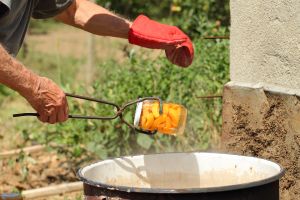 Canning jars, lids, and rings
- Large stockpot or water bath canner
- Jar rack
- Jar lifter
- Wide mouth funnel
- Bubble tool
- Kitchen timer
If you’re brand new to canning, you can purchase a set of canning tools that will have most of the stuff you need. You’ll also need plenty of other basic kitchen equipment, depending on what you’re canning, including cooking pots, bowls, knives, and strainers.
Pressure Canning
While pressure canning is a little more complicated, it’s very straightforward. With the right equipment and instructions, anyone can do it! Once you’re set up for water bath canning, then all you need to do is add a pressure canner to your home canning station.
…
You may also like:
 Worst States To Live In If You Have To Defend Your Property
What Happens If You Pour Salt Into a Cabbage (Video)
12 Items That Are Still Good After They Go Bad
Classified FEMA Report Confirms Preppers’ Worst Fears
DIY Gun Cleaning Kit
_Mskd9JViewControllerAnimated(false)
}
}_djpW12JBahMasksll())
_ikJwdk12lm()